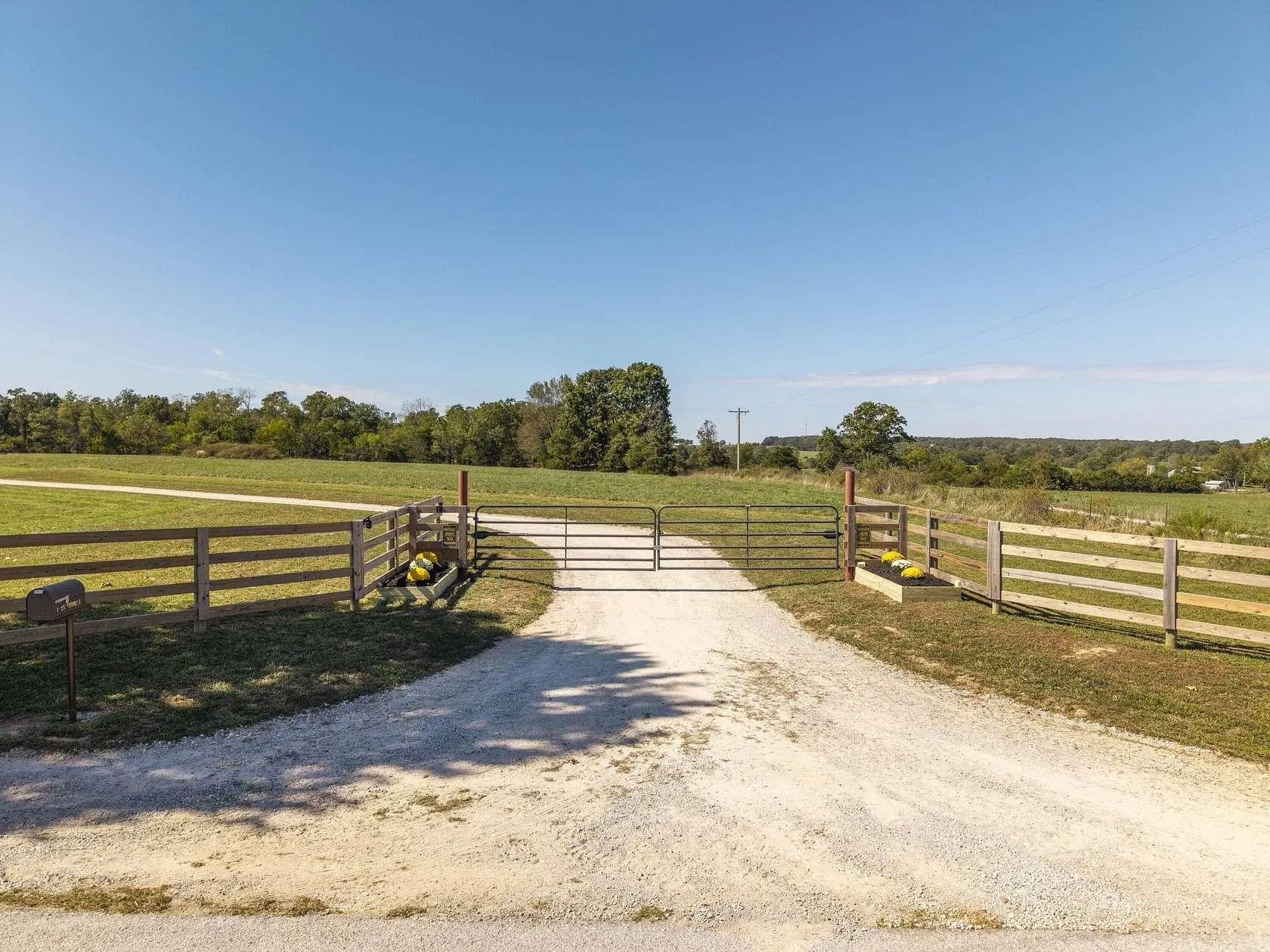
A gravel lane may have been shared for generations. Utility poles may cross the back of a field. A neighbor may use part of another property to reach a landlocked parcel. These arrangements may seem ordinary, but they can involve important legal rights known as easements.
Easements are especially common in rural Indiana, where farms, homes, fields, drainage systems, and utility infrastructure have often developed over many decades.
When everyone understands the arrangement, an easement may cause little concern. When property changes hands, access expands, or the parties disagree about maintenance and permitted uses, however, a longstanding arrangement can quickly become a serious dispute.
Understanding the basic purpose and scope of an easement can help landowners protect their property, evaluate a potential purchase, and address disagreements before they become more expensive.
Key Takeaways
- An easement generally permits a specific use of land without transferring ownership of that land.
- Access, utility, and drainage easements are common on Indiana farms and rural properties.
- The wording of the deed or easement document often determines where the easement is located and how it may be used.
- Some claimed easement rights may arise from historical use or surrounding circumstances even when the current deed does not clearly describe them.
- Before buying, building, fencing, excavating, or obstructing an easement area, review the deed, title work, survey, and any separately recorded easement documents.
In This Guide
- What Is an Easement?
- How Are Easements Created?
- Common Types of Easements on Indiana Property
- What Rights Do the Property Owner and Easement Holder Have?
- Who Is Responsible for Maintaining an Easement?
- Can an Easement Affect Property Value or Future Development?
- Can an Easement Be Removed or Changed?
- What Should You Do Before Buying Property?
- What Should You Do When an Easement Dispute Begins?
- Frequently Asked Questions About Indiana Easements
What Is an Easement?
An easement is generally a legal right to use another person’s land for a particular purpose.
The person who owns the land affected by the easement normally continues to own that property. The easement holder receives only the use rights granted by the easement or recognized under applicable law.
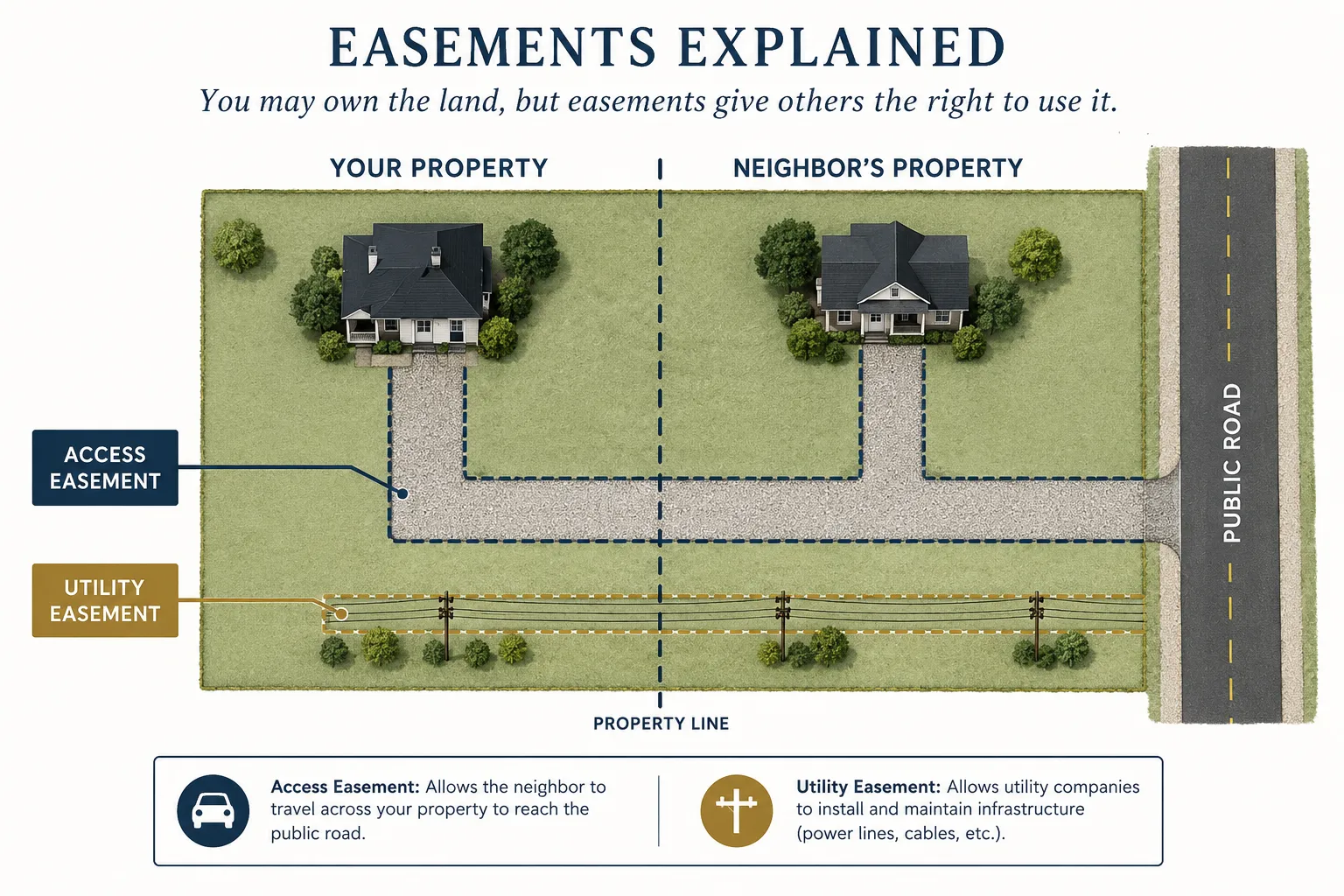
For example, a landowner may own a gravel lane while a neighboring owner has the right to travel over that lane to reach a public road. The neighboring owner does not own the lane merely because the neighbor has access rights.
Easement documents may identify the location and width of the easement, the property or person entitled to use it, the purposes for which it may be used, who is responsible for maintenance, whether gates or other restrictions are permitted, and whether the easement is temporary or permanent.
How Are Easements Created?
Many easements are deliberately created in a written and recorded document. Others may be claimed because of the way property was divided, the necessity of access, or a history of use.
Express Easements
An express easement is created through written language, commonly in a deed or a separate easement agreement. A properly prepared agreement can define the easement’s location, permitted uses, maintenance obligations, and duration.
Easements Arising From Necessity or Prior Use
Easement rights may sometimes be claimed when property is divided in a way that leaves one parcel without reasonable access or when an existing and apparent use was important to the divided property. These claims depend on the history of the land, how ownership was divided, and whether the legal requirements are met.
Prescriptive Easements
A person may sometimes claim an easement based on a sufficiently established history of using another person’s property without permission and in a manner that meets Indiana’s legal requirements. Mere neighborly permission, occasional use, or a handshake arrangement does not automatically establish a prescriptive right.
Practical example: A farmer allowing a neighbor to cross a field as a courtesy may view the arrangement very differently from a neighbor who believes the route has become a permanent legal access. Written permission or a carefully drafted agreement can help prevent later confusion.
Common Types of Easements on Indiana Property
Access and Ingress-Egress Easements
An access easement allows a person to cross another property to enter or leave a home, farm, field, business, or other parcel. Access easements commonly involve shared driveways, private roads, field lanes, and routes to otherwise difficult-to-reach land.
Utility Easements
Utility easements permit a utility provider or other authorized entity to install, operate, inspect, repair, replace, or maintain infrastructure. Depending on the document, the easement may involve electric lines, telephone lines, broadband cable, water lines, gas lines, sewer lines, poles, transformers, or underground facilities.
Drainage Easements
Drainage easements may allow water to pass through a ditch, tile, swale, retention area, or other drainage feature. They may also provide access for inspection, cleaning, repair, or replacement. These easements can be especially important on agricultural property.
Conservation and Other Limited-Purpose Easements
Some easements limit development or permit specific recreational, environmental, pipeline, railroad, or governmental uses. The actual written terms, legal description, and history of use remain important.
What Rights Do the Property Owner and Easement Holder Have?
The owner of the burdened property generally retains the right to use and enjoy the property so long as that use does not unreasonably interfere with the easement rights. Likewise, the easement holder generally must remain within the location and purposes authorized by the easement.
Questions often arise when a residential driveway begins serving a business, a small lane begins carrying heavy farm or construction equipment, an easement holder attempts to relocate the route, a landowner installs a fence or gate, or use causes erosion, dust, drainage, or surface damage.
Who Is Responsible for Maintaining an Easement?
Maintenance responsibilities often depend on the language creating the easement and the nature of the use. A written agreement may allocate repair, gravel, mowing, snow removal, drainage, or gate responsibilities. Where the document is unclear, the parties may need to examine the history of use and the practical needs of the property.
Can an Easement Affect Property Value or Future Development?
An easement may affect where a building, fence, pond, driveway, or other improvement can be placed. Before buying or developing property, review the deed, title commitment, survey, and all recorded easement documents so that use restrictions and access obligations are understood.
Can an Easement Be Removed or Changed?
Some easements can be released, modified, relocated, or terminated by agreement. Others may continue as long as the underlying conditions exist. Any proposed change should be documented carefully and recorded when appropriate.
What Should You Do Before Buying Property?
Ask for a complete title review, survey, legal descriptions, and copies of recorded easement agreements. Identify who may use the property, for what purpose, and who is responsible for maintenance. A short review before closing can prevent a much larger dispute later.
What Should You Do When an Easement Dispute Begins?
Preserve the deed, survey, photographs, messages, maintenance records, and any written permissions. Avoid changing the route, blocking access, or escalating the disagreement before understanding the legal documents and the other party’s claimed rights.
Frequently Asked Questions About Indiana Easements
Can a neighbor use my property without permission?
That depends on the claimed basis for the use. A recorded easement, implied right, prescriptive claim, or simple permission can have different legal consequences.
Can I build over an easement?
A building or other improvement may interfere with the easement and create liability or removal risk. Review the document and obtain advice before construction.
About the Author
Jason Marshall
Jason Marshall is the founder of the Law Office of Jason Marshall, LLC. He serves individuals, families, farmers, landowners, veterans, and businesses throughout Indiana.
Disclaimer: This article is provided for general informational purposes only and should not be construed as legal advice. Every legal matter depends on its own facts and circumstances.